ENDI Laboratory
Sensor and data-logger calibration
From the probe in the field to the value saved in a file: understand the measurement chain and which parts were actually tested.
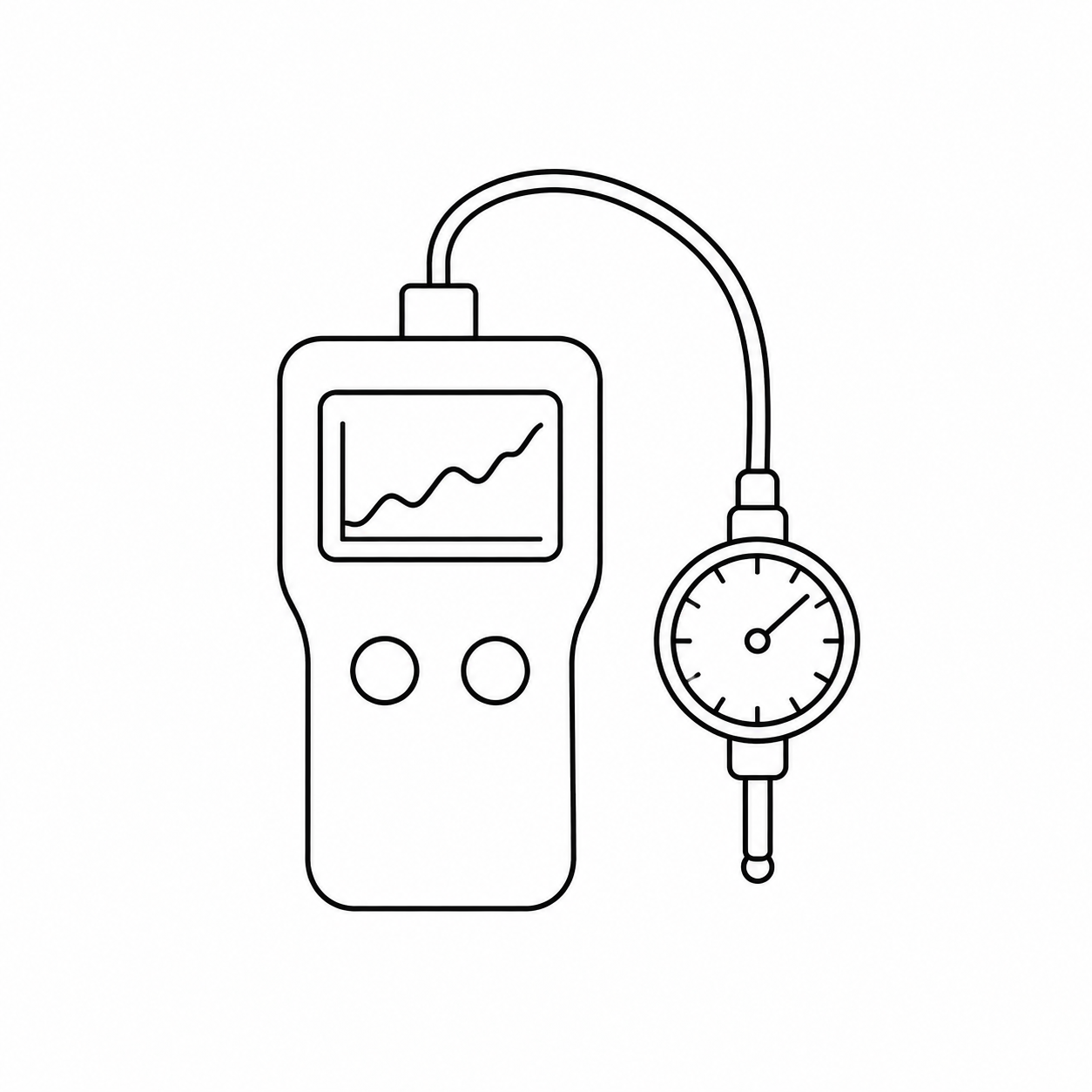
Which part of the chain is tested?
A result comes from a probe, connection, channel and reader or logger. Calibrating one component does not automatically describe the complete system. Define whether the service covers a probe, a reading channel or the connected assembly as used.
- Probe / sensor
- Connection and channel
- Reader / data logger
- Recorded value
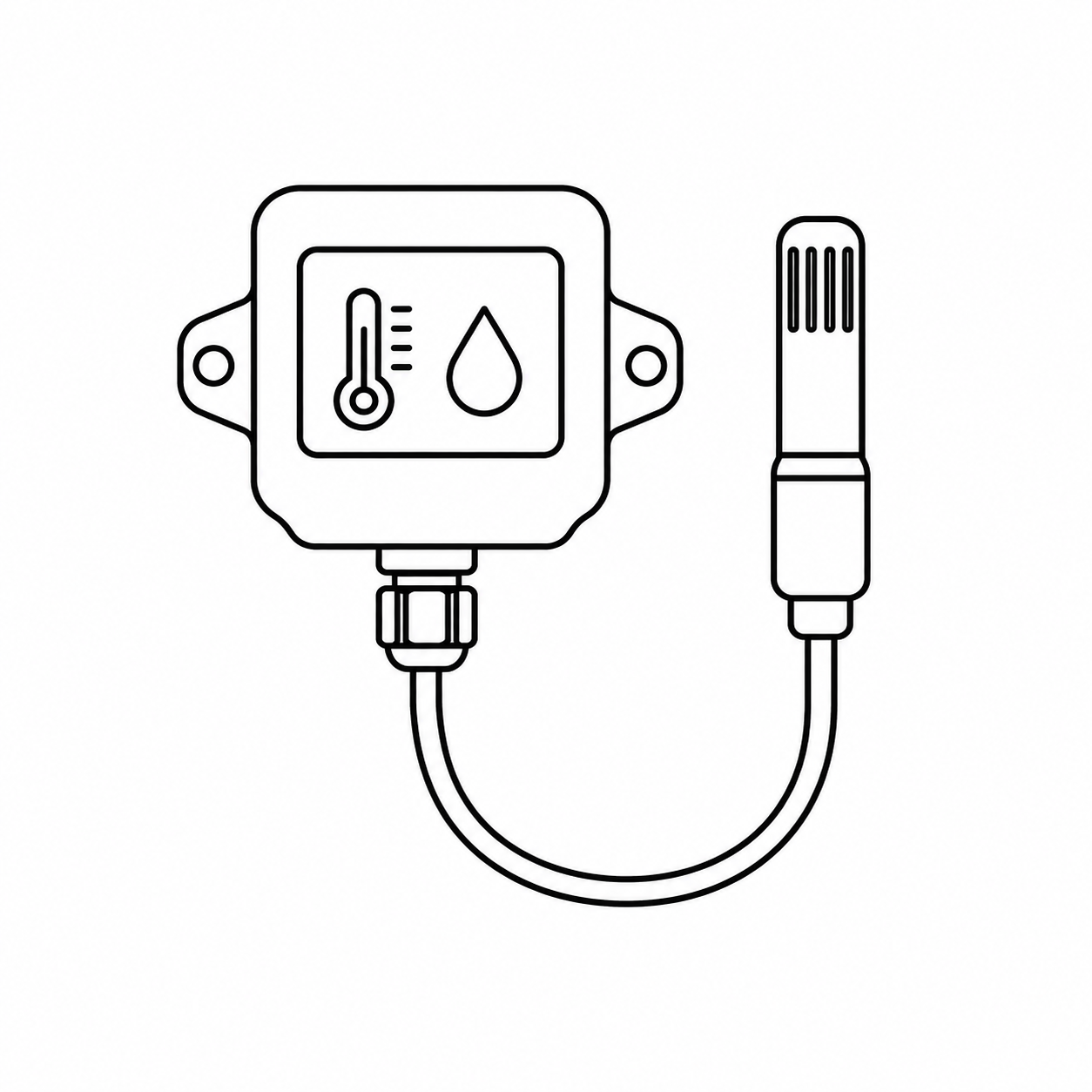 Probe / sensor
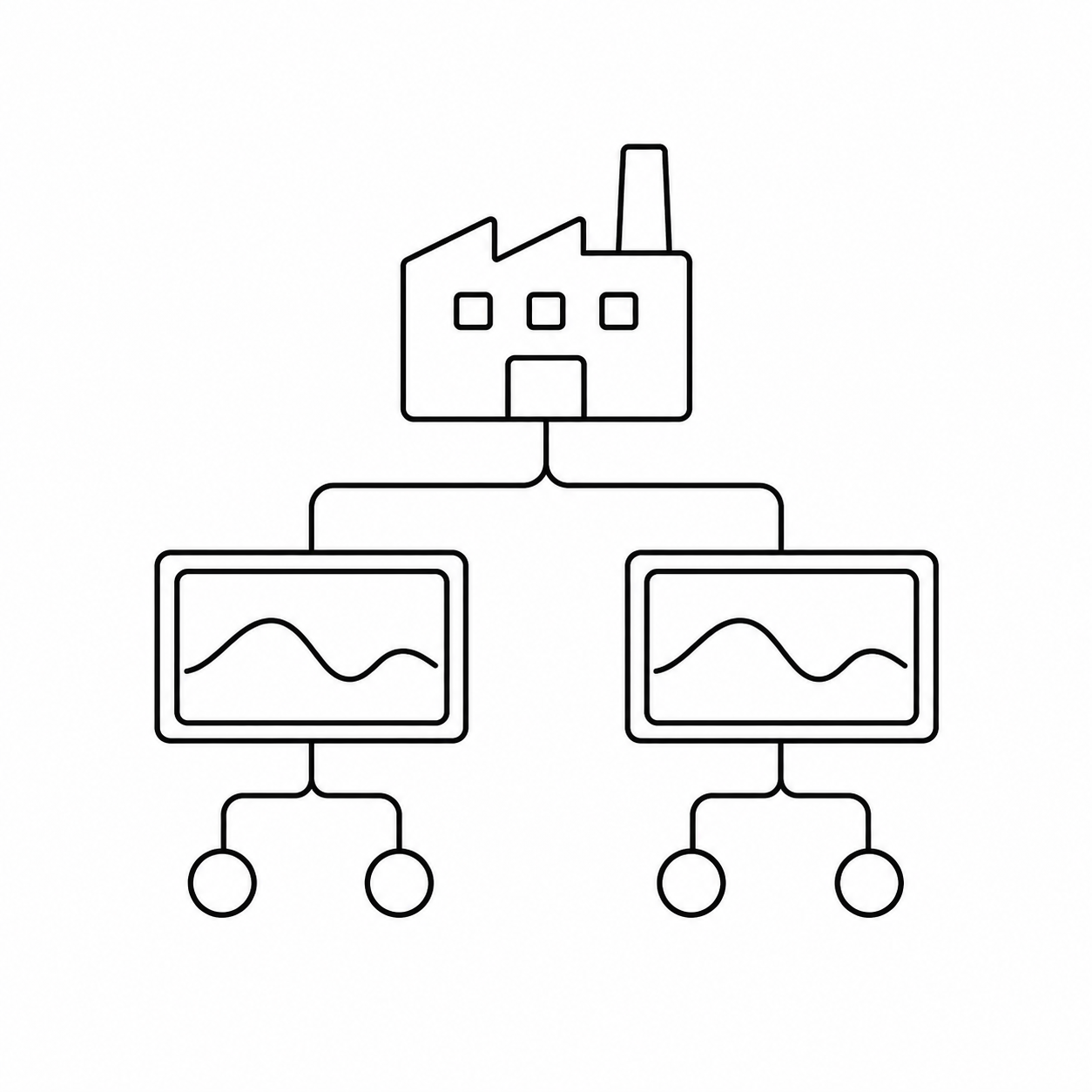 Connection and channel
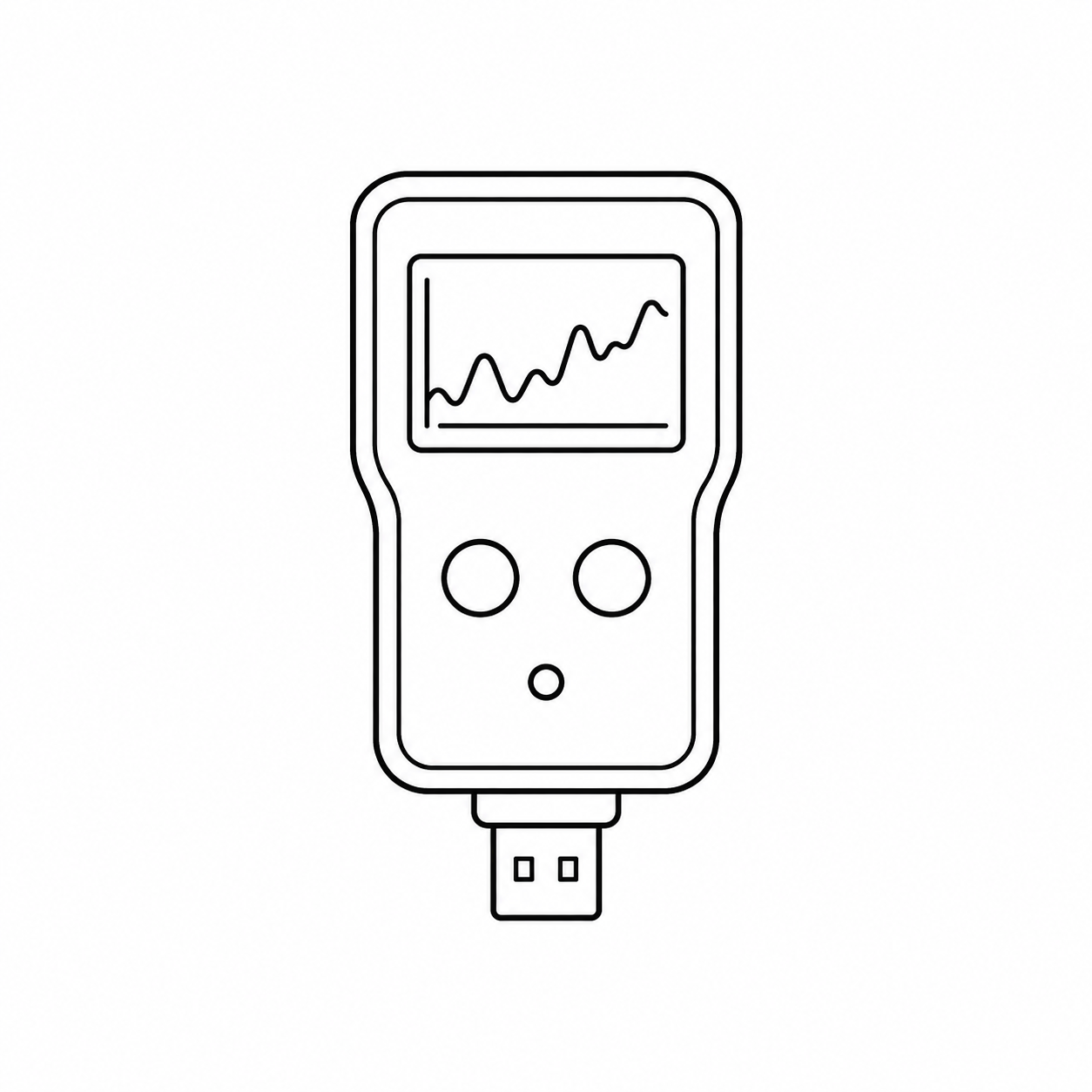 Reader / data logger
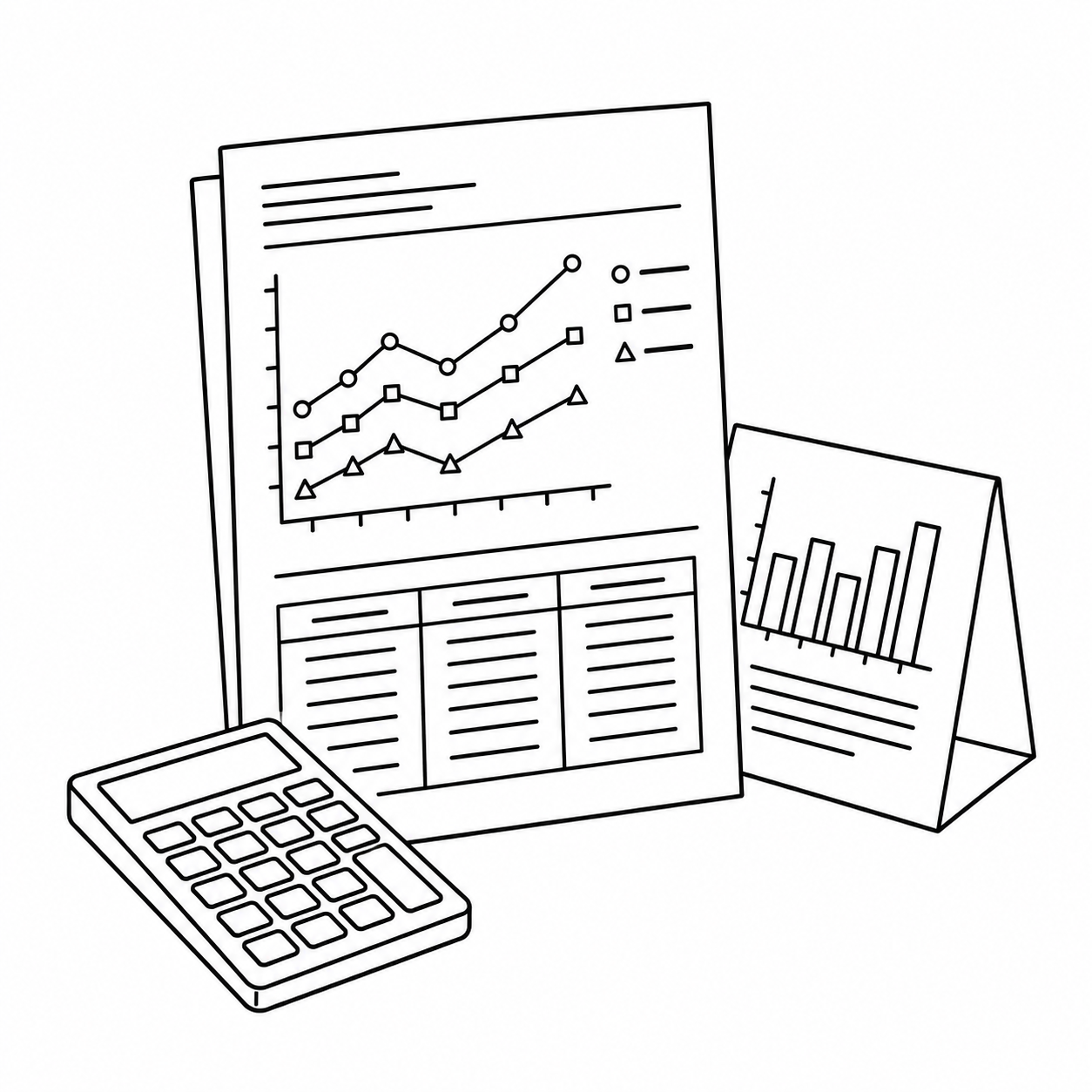 Recorded value
Conceptual illustration; not measurement results or a required equipment configuration.
Individual probe
Identify type, serial number, cable and connection. Establish which reader it works with and whether separate testing is possible.
Connected assembly
Keep the probe and channel identified as a pair. Replacing a probe, cable or settings may affect how the result applies to the new configuration.
Multi-channel logger
List the channels, probes and calibration points for each channel. A tested channel does not automatically represent the others.
From planning to documentation
Define the scope
List probes, channels, connections and required points.
Take measurements
Test the agreed component or assembly against a suitable reference.
Review the results
Associate each result with its probe and channel and review differences.
Provide documentation
Provide records stating what was tested and in which configuration.
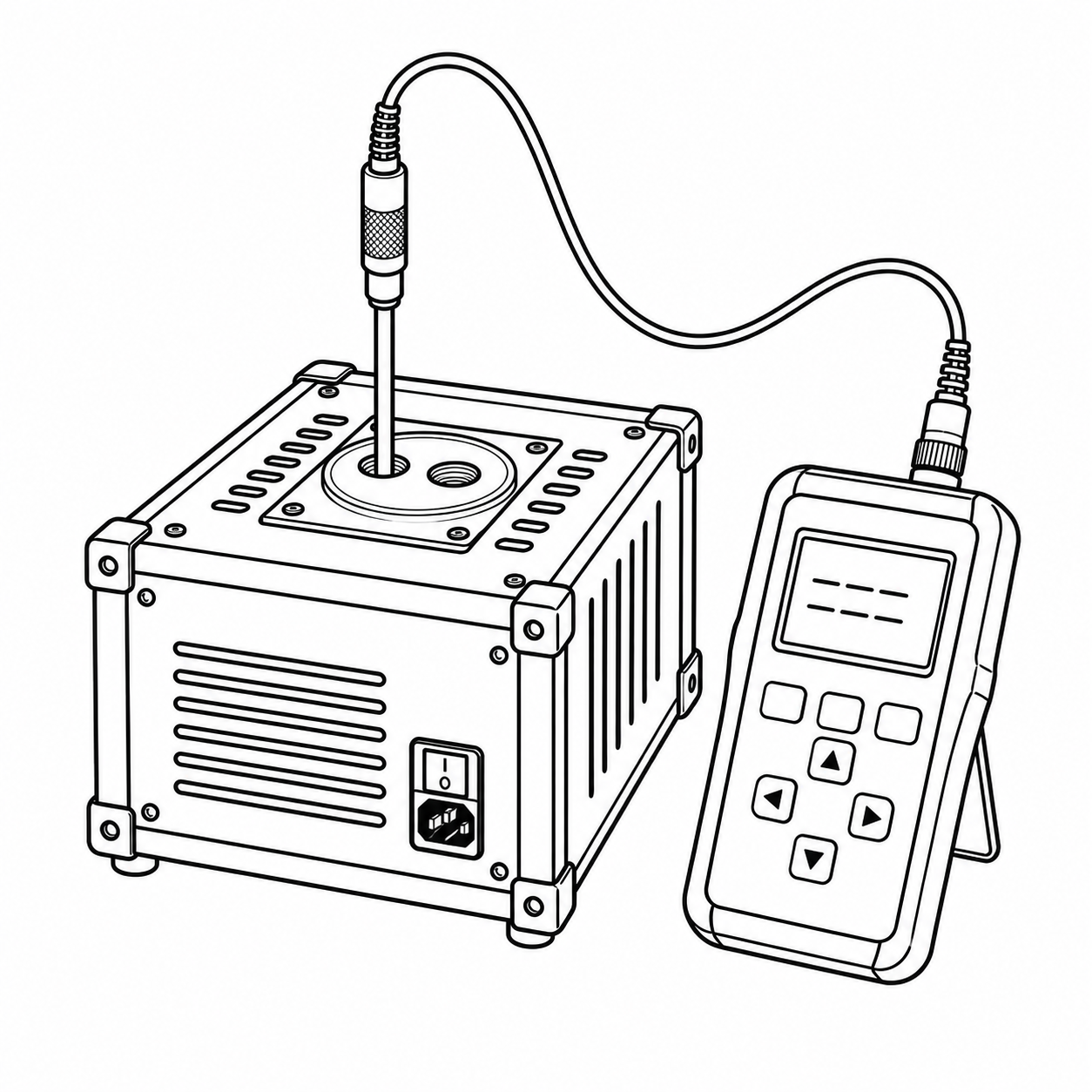
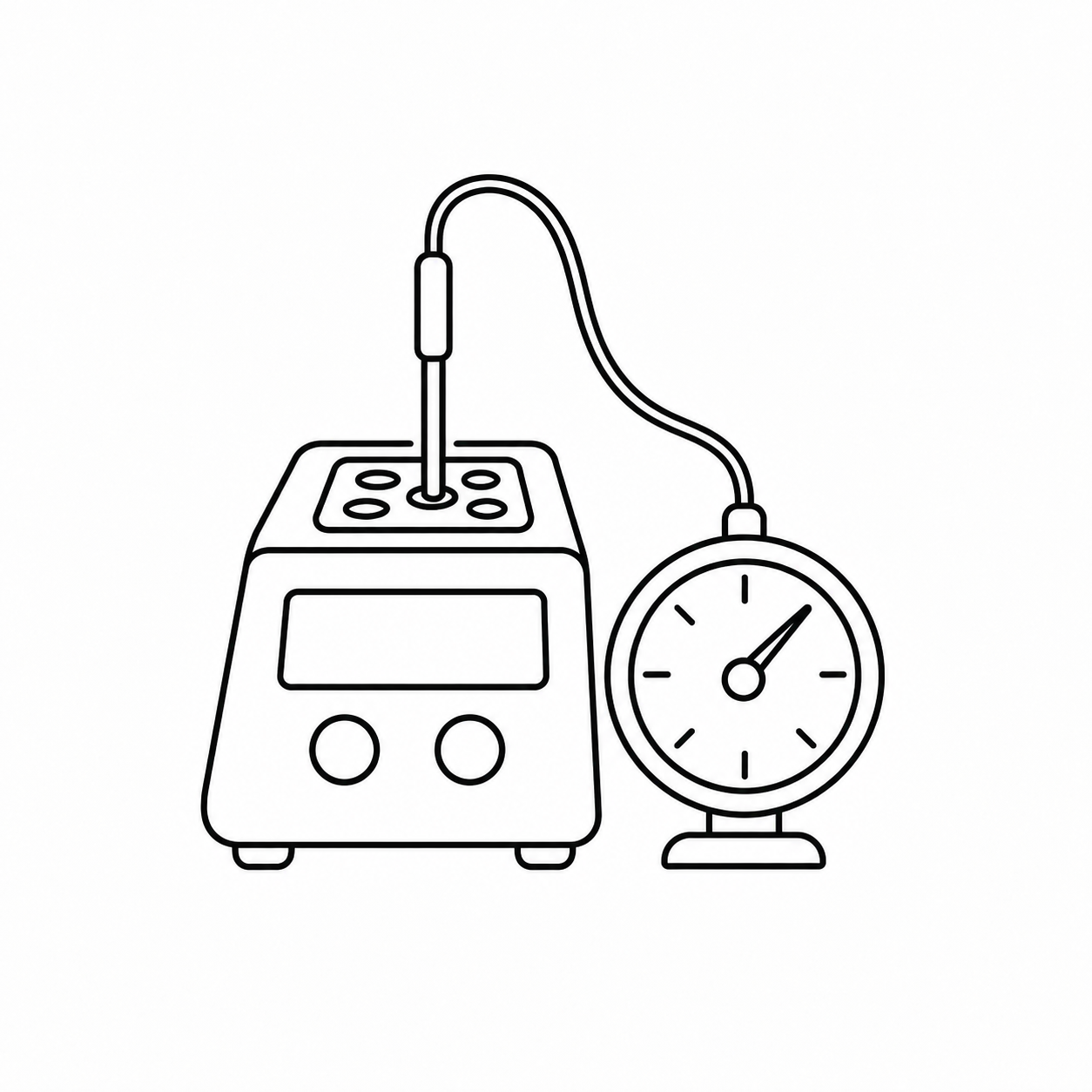
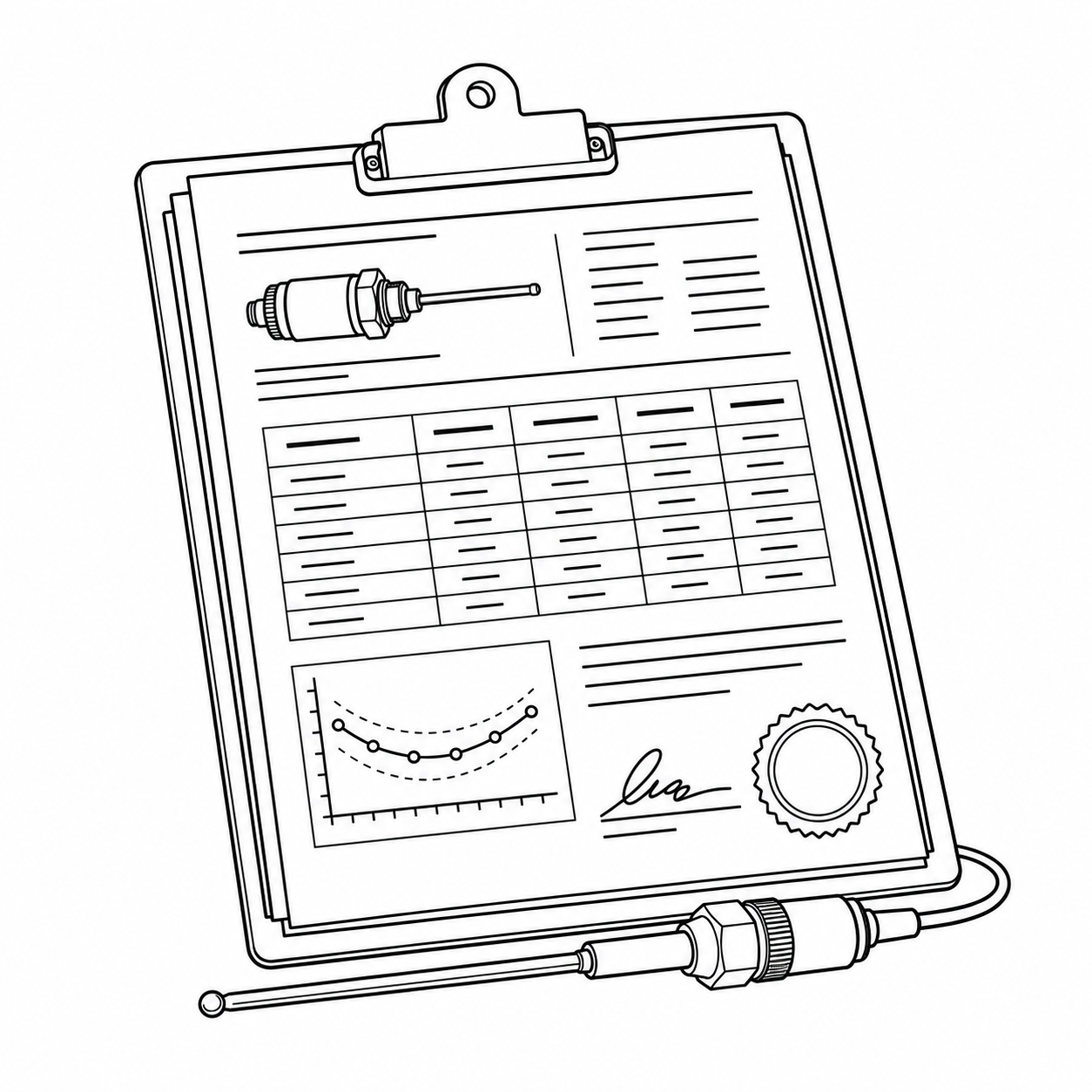
A result linked to the right channel
For a multi-channel system, prepare an identity table before testing. The following scheme illustrates the required links; it is not a certificate or calibration result.
- Probe identity
- Logger channel
- Points tested
- Result and record
Conceptual illustration; not measurement results or a required equipment configuration.
Test points and conditions
Results relate to the documented points and conditions. A satisfactory reading at one point does not establish the same performance across the full working range.
Suitability for a requirement
If a statement of conformity is needed, agree the acceptance limits and decision rule in advance, including how uncertainty is considered.
Before the service
- An equipment and channel list identifying each probe and its operating location.
- Probes, cables, chargers or adapters needed for operation, as agreed.
- Ranges, requested points, display units and relevant logging settings.
- Details of replaced components, faults or observed differences between the display and data file.
Useful questions
Does calibration also test connectivity and alerts?
Calibration focuses on measurement. Data storage, connectivity, clock and alert checks are separate functional checks that need a defined scope. Describe any difference between displayed and saved values when enquiring.
How often should equipment be calibrated?
There is no single interval for every instrument. Consider use, risk, result history, manufacturer guidance and applicable quality or regulatory requirements. A change in performance or damage calls for further review.
Explore the topic
Further technical reading: JCGM / BIPM · Calibration
To match the service to your needs
Send the equipment or space type, its use and the requirement you need to assess. The laboratory will review suitability and agree the work scope, deliverables and arrangements before starting.
Measurement ranges, test points, method and applicable approval scope are reviewed for each enquiry. The agreed quotation and laboratory arrangements define the service.